
WELCOME to the
SPCA Penang Monthly Newsletter
From Events and Education Department


| WELCOME to the | | |
| If you have a problem with the links in this newsletter, try view in browser. Issued: May 1, 2013 |
|
 | Skin problems in animals
Skin problems are a common sight in both dogs and cats. Frequentlly we receive animals that are suffering from various skin diseases. Here are some of the most commonly seen. There are a number of major groups: Parasitic problems, bacterial disease, fungal disease, allergies, contact irritations, autoimmune disease and many others. | |||
 | PARASITIC PROBLEMS Fleas and ticks Lots of cats and dogs are allergic to fleas and develop an intensely itchy rash when they are bitten by even a single flea and this can lead to chronic and serious skin problems. The signs of flea allergy in the dog is hair loss on the back, and thickened reddened skin in these areas; the animal will scratch and chew themselves and lick their sores and make themselves raw. This is an all too familiar problem in our hot & humid weather. Fleas and ticks are well known for their effects as parasites either through causing anaemias due to heavy burden of infestation or due to the secondary skin problems they may cause. However, they present a much more serious problem as a vector of disease. Ticks can transmit the following diseases - ehrlichiosis, babesiosis and haemobartonella (as do fleas) amongst others. The life cycle of a tick can normally be completed in one year but may be extended up to three. An adult tick can live for 18 months and in that period a female will lay somewhere between 2000 and 8000 eggs. Flea Control: To eradicate fleas from the home, you need to treat your dog, the interior and your compound. There are so many good flea control products available for cats and dogs. Talk to your veterinarian. Never indulge in buying any flea control stuff from the supermarket shelf without any guidance on its usage. It may cause more harm. | 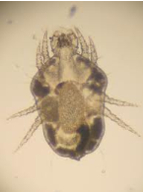 | ||
 | Mange - What is Mange? There is more than one type of mange but the most common are Demodectic and Sarcoptic mange. Demodectic mange is usually transmitted from mother to offspring and affects puppies from three to 12 months old. The demodex mite is commonly present in puppy's skin and usually does not cause symptoms. Adult dogs with defective immune systems are also prone to Demodectic mange. However, this type of mange is usually a relatively mild disease which comes and goes. Sarcoptic mange, also known as scabies, is what most people call mange. It is caused by a microscopic mite, Sarcoptes Scabei, which burrows in the skin. Different species have their own type of sarcoptic mange mite. How is mange spread? There is very little likelihood of transmission of Demodectic mange between species. In Sarcoptic mange, there is a strain which affects humans and a different one for dogs. The dog variety affects all the dog family so includes foxes and wolves. There is therefore a high risk of transmission between wild canines and domestic ones. Where there is close contact with humans they may also be infected occasionally. Cats are also susceptible to mange. Recognizing the signs Demodectic mange causes thinning of the hair around the eyes and mouth and on the front legs that turn into patches of hair loss approximately one inch in diameter. Surprisingly, the dog does not itch severely. In Sarcoptic mange, the female mite causes the characteristic intense itching as they burrow deep under the skin to lay their eggs. The eggs hatch in a few days, develop into adults and begin laying their own eggs in less than three weeks. Sarcoptic mange causes intense irritation resulting in inflammation and leading to bald scabby skin. It mainly affects the animal's ears, elbows, ventral abdomen and face. Dogs with this type of mange dig and bite at themselves with ferocity. There may also be oozing sores, crusty ear tips and secondary infection. |  | ||
 | EAR MITES (or "Canker") - is not so much a skin problem, but close. Ear mites cause lots of wax to form in the ears, and are very irritating. Also they are very infectious indeed. All dogs and cats in the house must be treated, cleaning out the ears, and then applying insecticidal ear drops repeatedly. It is recommended to do this once a week or frequently if your pet animal has this problem. |  | ||
 | FUNGAL DISEASES
Ringworm Ringworm is especially problematic because it is contagious to people as well as other pets. It is also difficult to rid an infected environment of the fungi that causes ringworm. It is not, as the name implies, caused by a worm. It is actually a fungal skin disease. There are several different types of fungi that can cause ringworm in pets. |  | ||
 |
Eczema Eczema can be extremely itchy, causing affected dogs to lick, bite, chew, scratch and rub at their skin, which leads to weeping sores on their skin. Eczema is often seasonal, being worse in hot, humid or dry weather. Owners of dogs with skin sores should take their pets to a veterinarian for treatment. |  | ||
| Adoption Highlight As at end April, our adoption number stands at 40. One can imagine how happy we are (though at times we let them go with a heavy heart) when an animal goes out of the gate. Quite a number are not happy to leave our premises and they had to be coaxed and talked into leaving. At SPCA, we spend much time talking and counseling adopters to ensure that our animals go into happy and long lasting home where our pets could live their lives for at least 10 years and beyond. |
|---|
| Some recent adoptions - off to happy homes:
|
| EducationSince the start of the school calendar, SPCA has visited 3 schools to give talks to create awareness on SPCA work and activities as well as on Responsible Pet Ownership. We would like to add that we are being visited by students from the various colleges, university clubs and individuals from various work and social organisations. We appreciate their interest in coming to SPCA to get to know the SPCA much better. | |
|---|---|
    | |
| New Tshirt on sale This tee shirt design attracted the most number of votes at 203. It is now available for sale online at RM22 each. Sizes available are for children, ladies and very limited stock for regular cut(unisex). Please place your orders now. You can purchase online via our website at http://merchandise.spca-penang.net |  |
| Happy Ending - A reunion Milo the dog which was found roaming at Farlim Pasar Malam and brought to the shelter has been reunited with his owner. The owner confessed that this is not the first time that he got lost. Milo is indeed very lucky. The owner has been educated and advised. Hope history does not repeat itself. |  |
| Upcoming EventsLOVE Carnival at USM, May 7 thru 9, 2013 from 10am to 5pm. SPCA and other NGOs are invited to join in the festival. The general public is invited.
International Homeless Animals Day - SPCA Family Carnival at Youth Park, Sunday 18th August from 10 a.m. to 2 p.m. This is an early announcement to all our friends and members for the above event. There will be food and entertainment for the whole family. We need sponsors and volunteers to help in the following:
|  |
| May Wish List
3 Bags X 50 KG unpolished rice for dogs (monthly request) 8 Bags X 8 KG dry puppy food (monthly request) 2 Cartons X 24 cans dog food (wet) 2 Cartons X 24 cans cat food (wet) Sponsorship for an Animal Abulance (donations welcome) Our thanks to Moira Toh and Ang Bee Hong for fulfilling our April Wish List. We appreciate your support. | |
| SPCA Penang Contact:
Jalan Jeti Jelutong 11600 Penang, Malaysia. (604)2816559 (6016)4166559
Email: www.spca-penang.net We welcome visitors to the shelter. Kindly note our visiting hours: Monday - Friday: 10am - 12.30pm and 2pm - 4.30pm Saturday : 10am - 12.30pm We are closed on Sundays only. | |
|---|---|
| SUBSCRIPTION INFORMATION | |
| To unsubscribe to this newsletter, please reply to this message (or send email to spcapenang@cmysystems.com) with "unsubscribe" in the subject line. To subscribe to the newsletter and other SPCA Penang alerts, please send email to spcapenang@cmysystems.com with "subscribe" in the subject line. | |


